
A virtual assistant for entrepreneurs is a remote professional who absorbs the administrative, operational, and logistical workload that consumes a disproportionate share of a solo founder’s cognitive bandwidth – freeing the founder to concentrate on the revenue-generating, relationship-dependent, and strategically irreplaceable activities that only they can perform. Research consistently shows that 36 percent of a founder’s working week disappears into administrative tasks, and that founders with high delegation capability generate 33 percent more revenue and achieve 1,751 percent higher three-year growth than those who retain operational tasks themselves (Gallup). Before a solo founder needs a co-founder to share the burden, they need a skilled virtual personal assistant to remove the burden entirely – at a fraction of the cost, with none of the equity, legal complexity, or strategic misalignment risk that a business partnership introduces.


If you have been telling yourself that you will hire help “once things get busier” or “once revenue justifies it,” this article will challenge that assumption directly. The evidence points in a different direction: the right time to hire a virtual assistant for entrepreneurs is precisely when things feel too busy to manage – not after.
For solo founders who are ready to act on that insight, VPERO’s dedicated virtual personal assistant services for entrepreneurs and founders provide pre-vetted, managed VPA support designed for high-growth, high-demand operator profiles.
The Solo Founder Trap: Why Working Harder Is Not the Answer
Most solo founders reach a predictable inflection point. Revenue is growing. The market has validated the idea. Clients or customers are engaged. And yet the founder is more overwhelmed than ever – not because the business is failing, but because its operational demands have outpaced the founder’s personal capacity to execute everything alone.
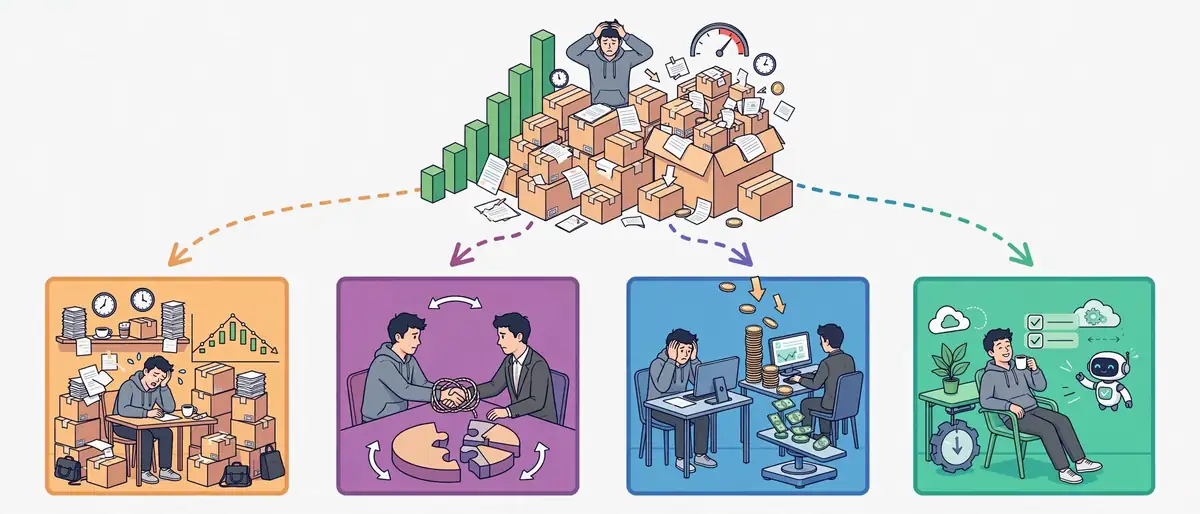
At this stage, the instinctive responses are usually one of three:
- Work longer hours
- Find a business partner to share the load
- Make the first full-time hire
All three carry significant problems that a virtual assistant for entrepreneurs resolves more efficiently.
Working longer hours produces diminishing returns beyond a threshold most founders have already crossed. Research cited by McKinsey shows that productivity declines sharply after 65 hours per week with no proportional output gain – yet 57 percent of founders report working beyond 80 hours per week.
Finding a business partner introduces equity dilution, legal complexity, alignment risk, and a fundamental restructuring of the business’s ownership and decision-making architecture. Partnership agreements are difficult to unwind and expensive to litigate when they fail – and according to Harvard Business School research on startup co-founder relationships, a significant proportion of co-founder relationships break down under operational pressure.
Making a full-time hire adds payroll obligations, HR infrastructure, employment law compliance, benefits administration, and a minimum 12-month cost commitment – all of which are significant structural commitments for a business that may still be in an early scaling phase.
A virtual assistant for entrepreneurs sidesteps every one of these complications. No equity. No employment obligations. No HR overhead. Flexible engagement. Immediate impact on the specific tasks consuming your time right now.
What a Virtual Assistant Actually Solves for a Solo Founder
To understand the leverage a VPA provides, it helps to think about the solo founder’s time in terms of its actual value profile.

Every task on a solo founder’s plate falls into one of three categories:
- Founder-critical work: Strategic decisions, client relationships, product direction, fundraising conversations, partnerships, and creative problem-solving. Only the founder can do this. It directly drives value.
- Trainable-and-delegatable work: Inbox management, scheduling, research, content scheduling, CRM updates, invoicing, travel planning, vendor coordination. Anyone capable and briefed correctly can do this. It occupies 36 to 50 percent of most founders’ working weeks.
- Automatable work: Recurring, rule-based processes that neither the founder nor a VPA should be spending time on manually.
The core problem for most solo founders is not a shortage of founder-critical work. It is that founder-critical time is constantly interrupted, compressed, and crowded out by the second category: trainable-and-delegatable tasks that should never have been on the founder’s plate in the first place.
A skilled virtual assistant for entrepreneurs takes ownership of the entire second category. The result is not simply hours saved. It is cognitive architecture restructured: the founder’s attention, energy, and strategic capacity redirect toward the activities where their impact is genuinely irreplaceable.
Why a VPA Outperforms a Business Partner for Most Solo Founders
The instinct to find a business partner when things feel overwhelming is understandable. Having someone capable alongside you feels like the obvious solution to being overwhelmed and alone. However, the analysis of what a business partner actually provides – versus what the overwhelmed solo founder actually needs – reveals a significant mismatch.
What Most Overwhelmed Solo Founders Actually Need
When founders say they need a business partner, the underlying need is usually one of the following:
- Someone to handle operational and administrative tasks they no longer have bandwidth for
- Someone to provide accountability and structure to execution
- Someone to take ownership of specific functional areas so the founder can focus on their strengths
- Reduced cognitive load from carrying everything alone
Every single one of these needs is addressed more directly, more cheaply, and with far less risk by a skilled virtual assistant for entrepreneurs than by a co-founder.

The Business Partner Risk Profile
A business partner is an appropriate solution when the business genuinely requires a complementary skill set that the founder cannot acquire, develop, or access through hiring – a highly specific technical expertise, a critical strategic network, or domain knowledge that would take years to develop independently.
For most solo founders at the stage where overwhelm sets in – typically between $50,000 and $300,000 in annual revenue – the actual bottleneck is not a missing skill set. It is a missing operational support layer. That is a VPA problem, not a co-founder problem.
The Direct Comparison
| Dimension | Business Partner | Virtual Personal Assistant |
|---|---|---|
| Cost | Equity: typically 10-50% of business | $500 – $3,000/month |
| Legal complexity | Extensive: partnership agreements, shareholder docs | None |
| Time to productive output | 3-6 months minimum | 1-3 weeks |
| Reversibility | Extremely difficult and costly | Simple: adjust engagement or exit |
| Solves operational overwhelm | Indirectly, with significant side effects | Directly and immediately |
| Strategic misalignment risk | High and structurally embedded | None |
| Decision-making complexity | Increased: requires alignment on every major decision | None: you remain sole decision-maker |
| Motivational alignment | Dependent on partnership health | Professional service relationship |
The table makes the structural case clearly. For the specific problem of operational overwhelm – too many tasks, not enough hours – a virtual assistant for entrepreneurs is the structurally correct solution. A business partner is a structurally expensive, legally complex, and strategically consequential response to a problem that does not require any of that.
The Specific Tasks That Are Holding Solo Founders Back
The following task categories represent the highest-frequency time drains for solo founders. Each one is fully delegatable to a skilled VPA from the first week of engagement.
Administrative and Communication Overhead

- Inbox management: Daily triage, priority flagging, template replies, follow-up tracking, and unsubscribe management
- Calendar management: Scheduling meetings, protecting deep work blocks, coordinating across time zones, and managing rescheduling
- Document preparation: Formatting proposals, preparing presentations, editing reports, and organizing files
- Meeting preparation: Compiling briefing notes, preparing agendas, and distributing pre-read materials
This category alone consumes 28 percent of the average knowledge worker’s week – 14 hours for a 50-hour working week – according to McKinsey Global Institute data.
Research and Decision Support

- Vendor and service provider research: Comparing options, reading reviews, and preparing recommendation summaries for purchasing decisions
- Market and competitor monitoring: Tracking relevant industry developments, competitor moves, and market data
- Prospect and contact research: Building background profiles before sales calls, partnership conversations, or investor meetings
- Content and topic research: Compiling data and background for the founder’s thought leadership content
Business Operations and CRM

- CRM hygiene and updates: Logging interactions, updating contact records, maintaining pipeline accuracy
- Lead follow-up sequences: Managing initial response and nurture sequences for inbound enquiries
- Invoice preparation and payment follow-up: Generating invoices from templates and sending professional payment reminders
- Expense tracking: Organizing receipts and maintaining expense records for accounting handoff
Content and Marketing Execution

- Social media scheduling: Queuing approved content across platforms using scheduling tools
- Newsletter formatting and scheduling: Taking approved content and formatting it correctly in the email platform before send
- Content repurposing: Converting long-form content into platform-specific short formats
- Basic graphic brief preparation: Briefing designers or preparing simple graphics using tools like Canva
Personal and Lifestyle Management

- Personal appointment scheduling: Health, wellness, and personal commitment coordination
- Travel planning: Flight and accommodation research and booking, itinerary preparation
- Personal errand coordination: Online purchasing, gift research, subscription management
- Household service coordination: Researching and scheduling service providers
Many solo founders discover that personal task management is where their VPA delivers the fastest quality-of-life improvement, because the cognitive and logistical overhead of personal admin compounds directly against their professional focus.
The Opportunity Cost Calculation: What Founder Time Is Actually Worth
The financial case for a virtual assistant for entrepreneurs becomes concrete when you apply opportunity cost thinking to the tasks currently on the founder’s plate.
Consider a founder generating $200,000 in annual revenue working 50 hours per week. Their effective hourly rate is approximately $77 per hour. If 36 percent of their working week – roughly 18 hours – goes to administrative and operational tasks that a VPA could own,
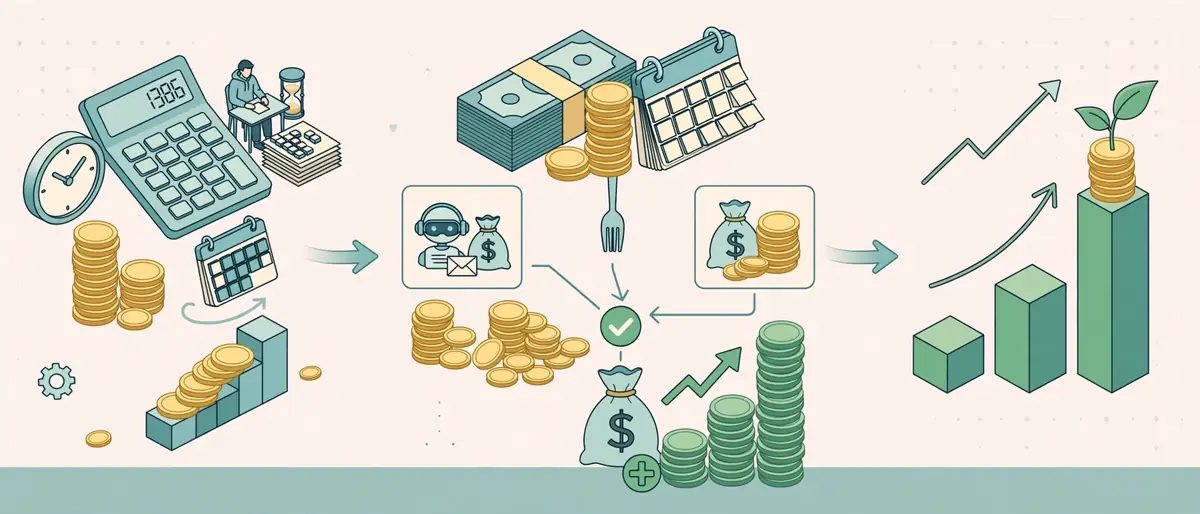
The opportunity cost calculates as follows:
- 18 hours per week at $77/hour = $1,386 per week in founder time on delegatable tasks
- Annual opportunity cost of retained admin work = approximately $72,000
- Annual cost of a full-time managed offshore VPA = $10,000 to $20,000
- Net annual opportunity cost recovered by hiring a VPA = $52,000 to $62,000
This is not a speculative projection. It is a straightforward calculation that most solo founders have never applied to their own situation – because doing so makes the decision to hire feel urgent rather than optional.
As Gallup research confirms, founders with strong delegation capability generate 33 percent more revenue than those who retain low-value tasks. At $200,000 in base revenue, that difference represents an additional $66,000 in annual income – more than three times the annual cost of a full-time VPA.
When is the Right Time for a Solo Founder to Hire a VPA?
The most common question solo founders ask is: “Am I at the right stage to hire a virtual assistant?” The answer is almost always yes – and the right stage is typically earlier than founders think.

5 Clear Signals That a VPA Investment Is Overdue
- You regularly work past 9pm on tasks that are not strategy, product, or client work. If your evenings are consumed by email, scheduling, and administrative catch-up, you have already crossed the threshold.
- You have a mental “someday” list of operational improvements you never get to. Process documentation, CRM setup, content publishing, and follow-up sequences that stay perpetually incomplete are classic signals of capacity deficit, not priority deficit.
- You have missed or delayed responding to leads, clients, or opportunities because of operational overload. Missed follow-ups and delayed responses have direct revenue costs. These are not acceptable trade-offs at any stage of a business.
- Your personal life shows measurable deterioration. Cancelled appointments, forgotten personal commitments, deferred health care, and strained relationships are the personal life equivalents of missed business opportunities. Both point to the same underlying problem.
- You spend more than 10 hours per week on tasks you could explain to someone else in a 10-minute video. If you can explain it, you can delegate it. If you are not delegating it, you are spending founder-rate time on VPA-rate tasks.
How to Get Started: A 4-Step Framework for Solo Founders
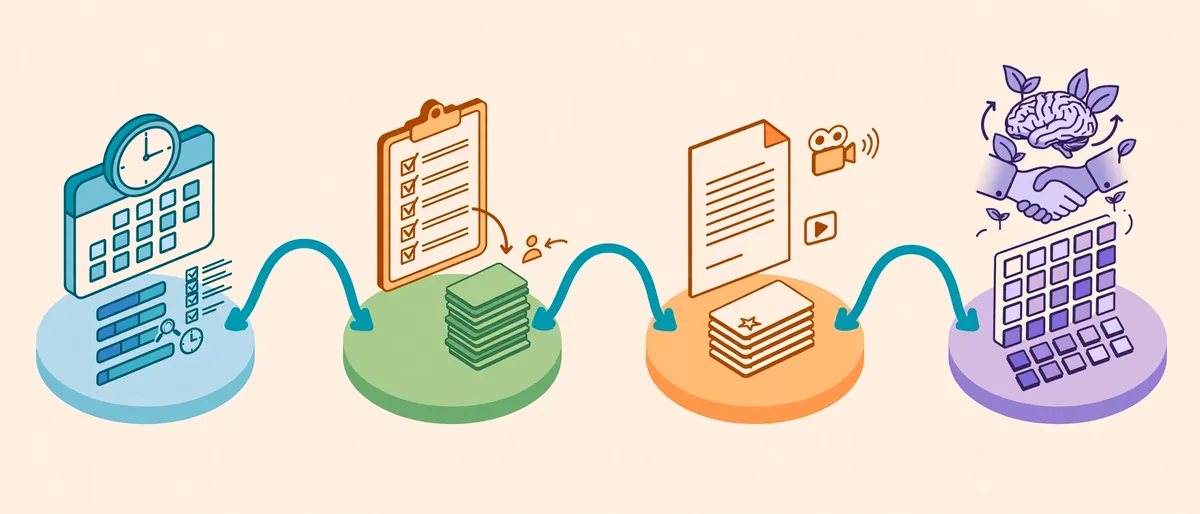
Step 1: Conduct a One-Week Time Audit
Track every task you complete for five working days. Log task name, time spent, and a simple category: “Only I Can Do This,” “Could Be Taught,” or “Fully Delegatable.” At the end of the week, total the hours in each category. The result is your initial delegation brief.
Step 2: Build Your Initial Delegation List
From the “Fully Delegatable” and “Could Be Taught” categories, identify the 10 to 15 tasks that: occur most frequently, take the most time per occurrence, and carry the lowest risk if imperfectly executed in the first week. These become your VPA’s first task batch.
Step 3: Document Your Top 5 Recurring Tasks Before Day One
For each of your top five recurring tasks, write a brief SOP: task name, expected output, tools involved, your standards, and a deadline or frequency. A five-minute screen recording works equally well. This documentation investment reduces your VPA’s onboarding period by weeks and produces higher-quality output from the first day.
Step 4: Start With a 30-Day Trial Mindset
Approach the first month as a calibration period, not a performance review. Your VPA is building context on your business, your preferences, and your standards. Provide consistent, specific feedback. Expand scope weekly as trust develops. By day 45 to 60, most founders report that their VPA operates largely independently on all initial delegation tasks.
5 Common Mistakes Solo Founders Make When First Hiring a VPA

Mistake 1: Waiting for “The Right Time”
The right time is always six months earlier than when founders actually hire. The operational overhead that justifies a VPA typically exists long before the founder acknowledges it. Every month of delay has a calculable opportunity cost.
Mistake 2: Hiring Too Narrowly
Some founders hire a VPA for a single task – social media scheduling or inbox management – and underutilize the relationship. A skilled VPA can manage a wide portfolio of tasks simultaneously. Starting with a narrow scope limits the ROI artificially.
Mistake 3: Failing to Share Business Context
A VPA who does not understand your business, your clients, your positioning, and your communication standards will produce generic, off-brand outputs. Invest in a comprehensive onboarding briefing document covering your business fundamentals, target audience, tone of voice, and key relationships.
Mistake 4: Measuring Hours Instead of Outcomes
The correct metric for VPA performance is output quality and business impact, not hours billed. Founders who obsessively track hours create a management burden that undermines the time savings the VPA is supposed to generate.
Mistake 5: Treating the Relationship as Temporary
The compounding value of a VPA relationship builds over time. A VPA with six months of context on your business is dramatically more effective than one in their first week. Treating the relationship as a short-term experiment produces short-term results. Investing in it as a long-term operational partnership produces compounding returns.
Expert Tips for Maximizing VPA Value as a Solo Founder

- Build a “how I work” document before your VPA starts. Cover your communication preferences, working hours, decision-making style, tone of voice, key relationships, and non-negotiable standards. This document becomes a living reference that accelerates everything.
- Use your VPA to build institutional knowledge. Ask your VPA to document your processes as they execute them. After 90 days, you will have a complete operational playbook for your business – an asset with value well beyond the VPA relationship itself.
- Protect your deep work blocks first. Before assigning any tasks, work with your VPA to establish protected calendar blocks for founder-critical work. The primary purpose of a VPA is to defend your highest-leverage time – not just to complete tasks.
- Review your delegation scope monthly. As your business evolves, new tasks become delegatable and old ones change shape. A monthly review ensures your VPA is always working on the tasks that deliver the highest current leverage.
- Never re-do work your VPA has completed without first giving feedback. Silently correcting output instead of explaining the standard removes the VPA’s ability to learn and improve. Give specific feedback every time. The investment in feedback compounds directly into output quality.
Frequently Asked Questions About Virtual Assistants for Entrepreneurs
Why should a solo founder hire a virtual assistant before a business partner?
A virtual assistant for entrepreneurs directly solves the operational overwhelm that most founders misdiagnose as a need for a business partner. A VPA absorbs the administrative and logistical workload – inbox management, scheduling, research, CRM, content, and personal logistics – at a fraction of the cost and with none of the equity dilution, legal complexity, or strategic misalignment risk that a business partnership introduces. For most solo founders, the bottleneck is operational capacity, not a missing skill set – and that is precisely what a VPA resolves.
At what revenue stage should a solo founder hire a virtual assistant?
The decision is better framed by time signals than revenue signals. If you are working more than 10 hours per week on tasks that could be explained to someone else in a brief document or short video, you have crossed the threshold. Most founders hit this point between $50,000 and $150,000 in annual revenue – significantly earlier than they typically act on it.
What tasks should a solo founder delegate to a virtual assistant first?
Begin with the highest-frequency, lowest-risk tasks: inbox triage, calendar management, and basic research. These generate immediate time returns, carry low risk if initial output is imperfect, and allow you to build your VPA’s context before moving to more sensitive responsibilities like client communications, CRM management, and content scheduling.
How does a virtual assistant for entrepreneurs differ from a general VA?
A virtual personal assistant for an entrepreneur manages both professional and personal task categories from a single ongoing relationship. This integration matters because solo founders typically carry both professional administrative overload and personal life management deficit simultaneously. A VPA who manages your scheduling, inbox, research, travel, and personal errands from one relationship builds deeper context and delivers more proactive support than two separate arrangements.
How long does it take for a VPA to reach productive autonomy?
Most VPAs reach effective independence on initial task batches within two to four weeks when onboarded with written SOPs and active feedback. The 60 to 90-day point is typically where the relationship reaches its first significant value inflection: the VPA has enough context on the business and the founder’s preferences to begin operating proactively rather than reactively.
Is a virtual assistant more cost-effective than a part-time employee for a solo founder?
In most cases, yes – significantly. A fully loaded part-time employee in the United States costs $25,000 to $40,000 per year when salary, payroll taxes, benefits, equipment, and HR administration are included. A full-time dedicated offshore managed VPA typically costs $10,000 to $20,000 per year all-inclusive, with no employment obligations, no HR infrastructure required, and no minimum notice period for adjusting the engagement. For a solo founder at an early scaling stage, the structural flexibility of the VPA model is as valuable as the cost difference.
Leverage Is the Solo Founder’s Most Scarce Resource
Every solo founder operates with a finite and non-renewable resource: the hours in their working week that produce genuine strategic, creative, and relational value. Everything else on the task list – every email, every scheduling back-and-forth, every research task, every administrative obligation – is consuming that resource without producing a return proportional to what it costs.

A virtual assistant for entrepreneurs is the most direct, most cost-effective, and most structurally appropriate response to this problem at every stage of solo founder growth. It does not require equity. It does not require employment infrastructure. It does not introduce strategic complexity. It simply removes the operational noise that is currently preventing a capable, motivated founder from operating at their actual potential.
The founders who grow fastest are not the ones who work the most hours. According to Gallup’s research on delegation and revenue growth, they are the ones who delegate most effectively – freeing their attention for the decisions and relationships that compound into long-term business value.
A business partner may be the right structural choice at some stage of your journey. A skilled, dedicated virtual personal assistant is almost certainly the right choice right now – before the partnership conversation, before the first full-time hire, and before you spend another quarter doing $15-per-hour tasks at your $100-per-hour rate.
Ready to stop doing everything yourself and start operating at your highest leverage? Explore VPERO’s dedicated virtual assistant solutions for entrepreneurs and solo founders and connect with a pre-vetted VPA who can take ownership of your operational workload from week one.
Delegate Your Operational Work to Virtual Personal Assistant →