
An AI-trained virtual personal assistant is a human remote professional who has been systematically upskilled in the operational use of AI tools – including large language models, automation platforms, and AI-powered research and communication software – enabling them to deliver two to three times the output of a conventional VA at the same cost point. Unlike a pure AI agent, which executes predefined logic or generates probabilistic responses without accountability, judgment, or genuine contextual understanding, an AI-trained VPA retains full human agency: the capacity for nuanced reasoning, proactive communication, relationship management, and adaptive decision-making. This hybrid professional model represents the most significant capability evolution in virtual personal assistant services since the widespread adoption of cloud collaboration tools, and it fundamentally changes what buyers should expect from a remote support engagement in 2026.
If that distinction still feels abstract, this article will make it concrete. Below, you will find a full breakdown of what AI training actually changes, how AI-trained VPAs compare to both pure AI tools and traditional human assistants, and how to evaluate whether this model is the right fit for your needs.
For those ready to move straight to outcomes, VPERO’s AI-enabled virtual personal assistant services deliver professionally managed, AI-augmented VPA support built for modern delegation demands.
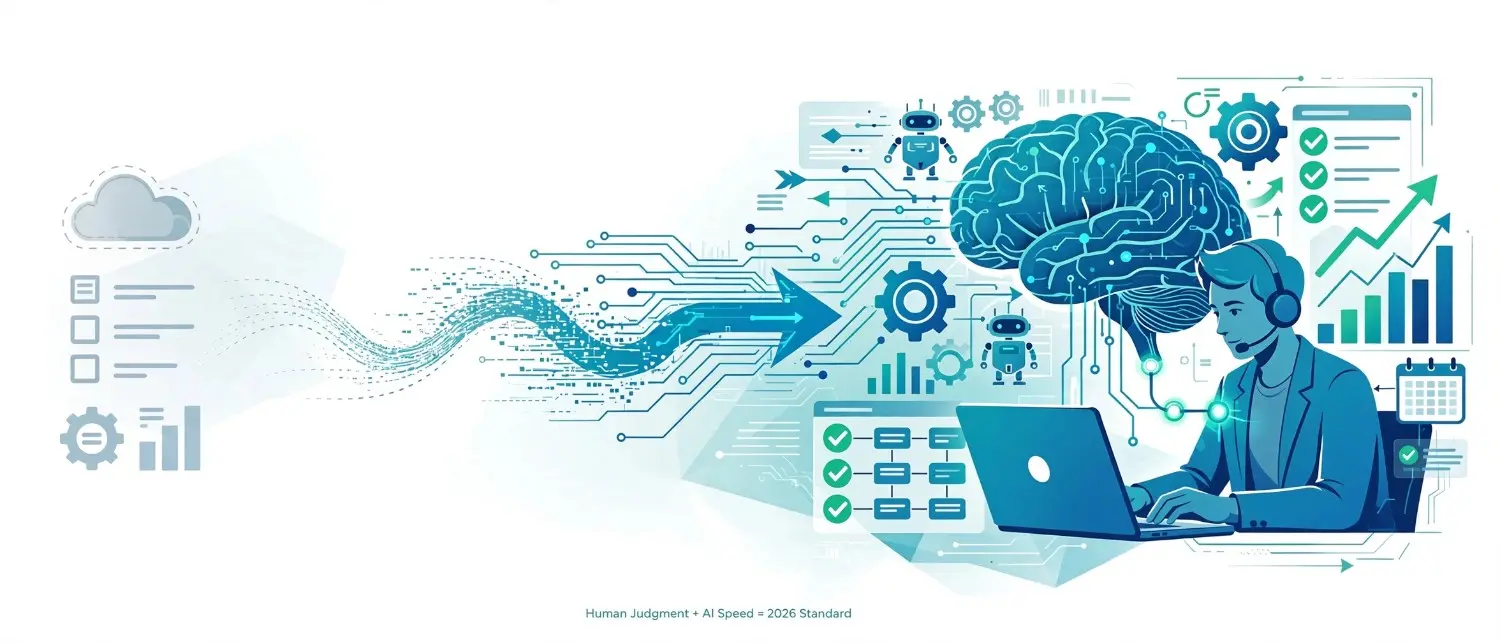
The Problem with the Current Market: Three Categories of Confusion
Before defining what an AI-trained virtual personal assistant is, it helps to understand why so many buyers get confused about the options. Right now, the market presents three distinct categories under loosely overlapping terminology:
AI Agents and chatbots
Automated software systems – such as ChatGPT interfaces, workflow agents and agents, or conversational AI agents – that generate text responses or execute predefined task logic. They have no memory of your preferences, no judgment about context, and no accountability for outcomes.
Traditional virtual assistants
Human remote professionals who work manually across standard business tools. They bring genuine human judgment and relationship capacity but operate without AI-augmented speed or breadth of capability.
AI-trained virtual personal assistants
Human professionals who combine the contextual intelligence and judgment of the second category with systematic proficiency in AI tools – producing output quality and volume that neither category achieves independently.
Each category suits different needs. Understanding the structural differences – not just the surface-level ones – is essential before making a hiring decision.
What an AI Agent Can and Cannot Do
AI Agents – whether standalone tools like ChatGPT, Claude, or Gemini, or workflow automation systems built on platforms like Zapier or Make – deliver gen uine value for specific, well-defined task types. However, their limitations are equally concrete.
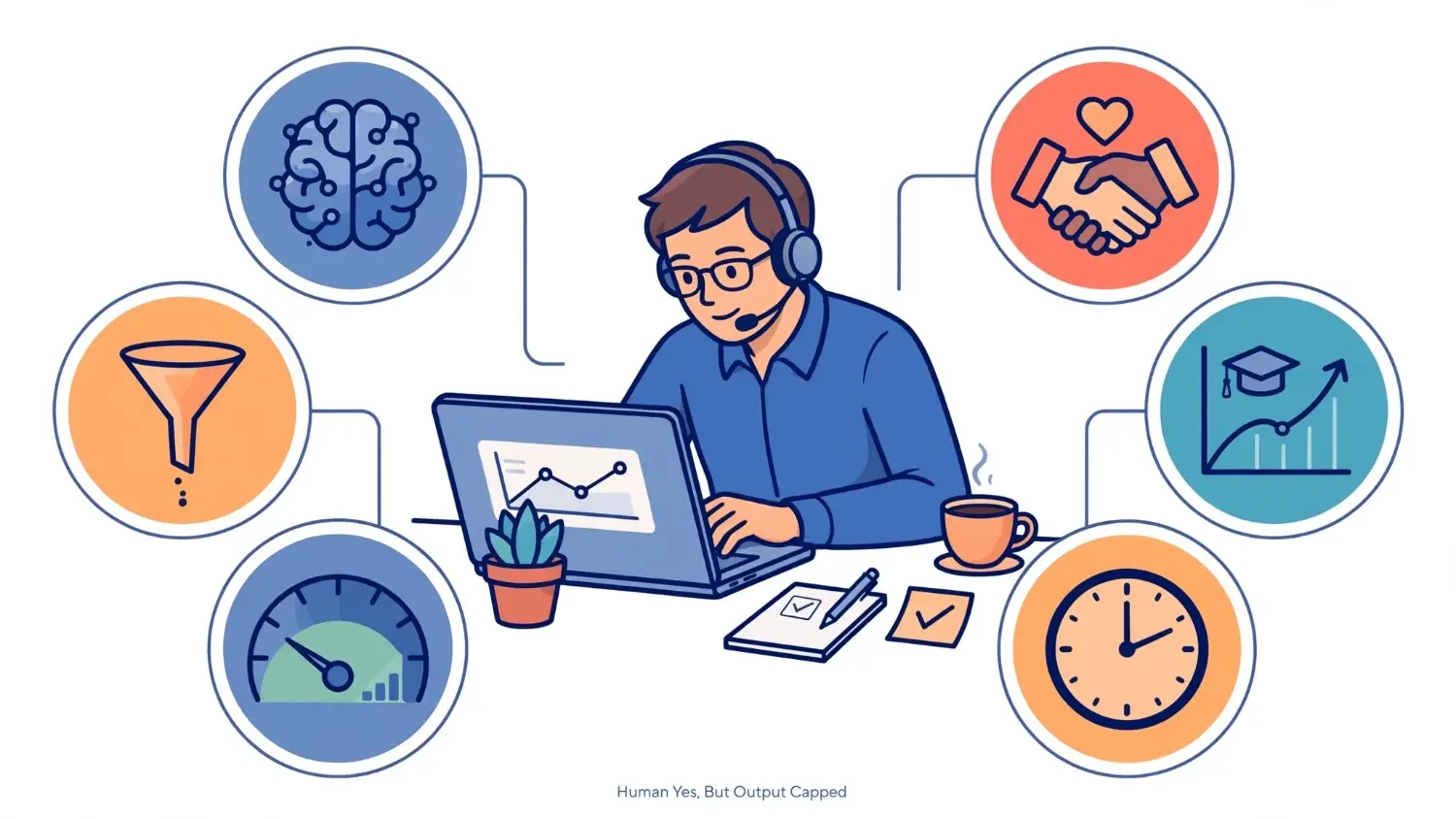
What AI Agents do well:
High-speed content generation
Drafting emails, summarizing documents, producing first-draft copy at machine pace
Structured data processing
Extracting, organizing, and formatting large volumes of information according to defined rules
24/7 availability
Operating continuously without fatigue, time zone constraints, or human availability gaps
Repeatable automation
Executing identical workflow steps across high-volume, rule-based processes consistently
Where AI bots or AI agents consistently fall short:
Genuine contextual judgment
AI bots or AI agents generate statistically probable responses rather than contextually correct decisions. They cannot reliably distinguish when a rule-based response is inappropriate for a specific relational or professional situation.
Proactive initiative
Agents respond to inputs. They do not anticipate needs, identify gaps, or volunteer relevant information unless explicitly prompted.
Accountability and ownership
When an AI agent produces an incorrect output, no one is accountable. There is no professional to flag the error, course-correct, or take ownership of downstream consequences.
Relationship management
Executive communication, vendor negotiation, stakeholder briefings, and client correspondence require human judgment, tone calibration, and interpersonal awareness that no current AI system replicates reliably.
Novel situations
According to research from MIT Technology Review on hybrid human-AI enterprise models, fully autonomous AI systems still fail at a significantly higher rate than human-AI collaborative arrangements when tasks involve non-standard scenarios or require adaptive reasoning.
The core limitation of a pure AI agent is not capability – it is the absence of a professional who is responsible for the outcome.
What a Traditional Virtual Assistant Can and Cannot Do
A traditional virtual personal assistant – a human remote professional working manually with standard tools – brings genuine capabilities that AI Agents lack by design. However, as the AI tool landscape has matured through 2025 and 2026, the gap between AI-augmented and non-augmented human assistants has widened significantly.
What traditional VAs do well:
Human judgment and nuance
Real professionals apply contextual reasoning, interpersonal sensitivity, and professional discretion to every task
Proactive relationship management
A skilled traditional VA anticipates needs, maintains relationship continuity with third parties, and escalates appropriately
Adaptive learning
Human assistants build genuine understanding of your preferences, communication style, and operational priorities over time
Accountability
When something goes wrong, a human professional takes ownership, communicates, and resolves the issue
The growing limitations of purely traditional VAs
Lower output per hour
A traditional VA completing research, drafting summaries, and preparing briefing documents manually takes substantially longer than an AI-augmented equivalent working on the same task set.
Narrower task breadth
Without AI tools, a traditional VA’s skill ceiling is limited to their own individual expertise. An AI-trained VPA effectively extends their capability range across writing, research, data analysis, and content production simultaneously.
Slower turnaround on routine tasks
Tasks like email drafting, document formatting, meeting summaries, and first-draft content production are dramatically faster with AI tool integration.
Missed compounding efficiency
According to industry data referenced by Wishup’s 2026 virtual assistant trends report, the leading trend in professional assistance is AI-augmented human VAs delivering approximately three times the output at equivalent cost – a multiplier that non-augmented assistants simply cannot match.
The conclusion is not that traditional VAs are obsolete. Rather, a skilled human assistant who does not use AI tools is leaving significant productivity on the table for both themselves and their clients.
What Defines an AI-Trained Virtual Personal Assistant
An AI-trained virtual personal assistant is precisely what the name describes: a human professional whose core competencies include systematic, workflow-integrated use of AI tools across every major task category they handle.
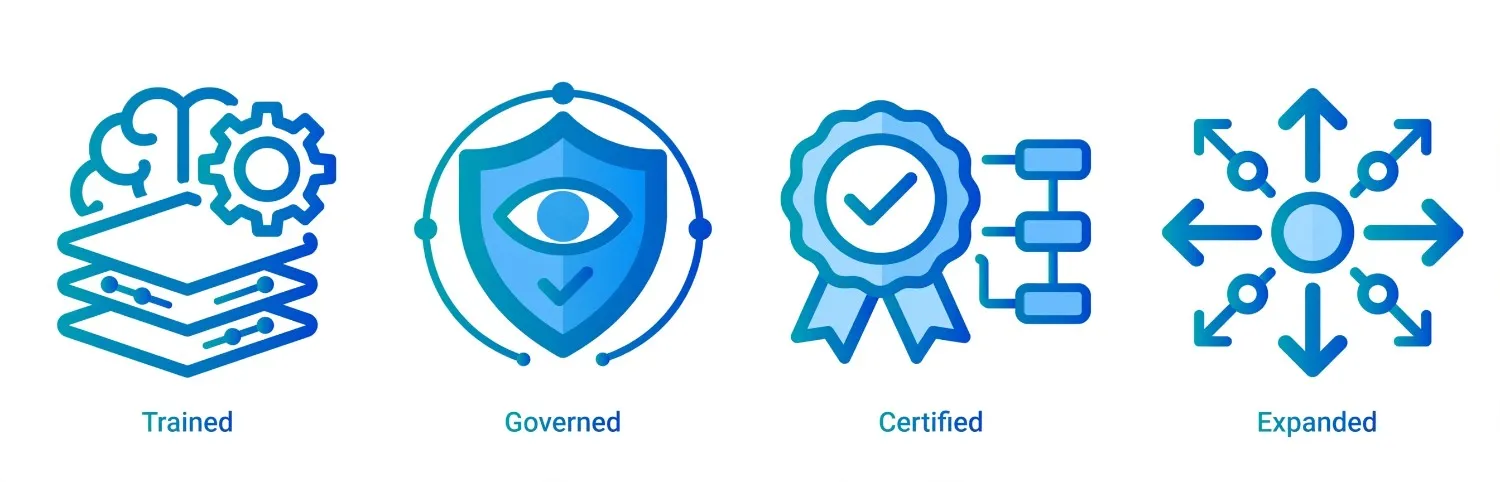
The defining characteristics:
1. AI tool proficiency as a core skill, not an occasional add-on
An AI-trained VPA does not occasionally use ChatGPT to help with a writing task. Instead, they maintain an integrated AI tool stack that accelerates their core workflows. Research tasks run through AI-powered tools like Perplexity. Email drafting uses AI writing assistants calibrated to your tone and communication style. Meeting summaries generate automatically and receive human editing before delivery. Scheduling workflows use AI-enhanced calendar coordination tools. Every task category has an AI layer that the VPA actively manages and optimizes.
2. Human judgment remains the governing layer
This is the critical distinction from pure AI agent services. In an AI-trained VPA arrangement, the AI tools accelerate execution; the human professional governs quality, context, and judgment. The VPA decides when the AI output is ready, when it requires editing, when the situation requires a fully manual approach, and when to escalate or adapt. This human-in-the-loop governance structure is what separates AI-augmented human assistance from autonomous AI execution.
3. Systematic training methodology
The “trained” designation is meaningful. An AI-trained VPA has not simply downloaded ChatGPT. They have been trained – through structured programs, workflow frameworks, and tool-specific certification – to apply AI tools consistently, responsibly, and effectively within professional service contexts. This training covers prompt engineering, output quality evaluation, tool selection by task type, and professional judgment about when AI-generated content requires human revision before use.
4. Expanded capability breadth at equivalent cost
Because AI tools extend what a human professional can produce in a given hour, an AI-trained VPA effectively offers a wider service scope at the same price point as a traditional VA. Tasks that previously required specialist freelancers – first-draft content, competitive research briefs, data formatting, meeting documentation – become part of a standard AI-trained VPA’s deliverable set.
The Three-Way Comparison: AI Agent vs. Traditional VA vs. AI-Trained VPA
The distinctions become clearest in direct comparison:
Full Capability Comparison Table
| Capability | AI Agent | Traditional VA | AI-Trained VPA |
|---|---|---|---|
| Human judgment and contextual reasoning | None | Full | Full |
| Accountability for outcomes | None | Full | Full |
| Proactive initiative and anticipation | None | High | High |
| Output speed and volume | Very high | Moderate | High |
| Task breadth per engagement | Narrow (by design) | Moderate | Wide |
| Relationship and communication management | None | Full | Full |
| Novel situation handling | Unreliable | Reliable | Reliable |
| AI-accelerated task execution | Native | None | Native |
| Availability and responsiveness | 24/7 | Business hours | Business hours + async |
| Cost per hour of useful output | Low but variable | Moderate | Moderate with high output multiplier |
| Memory of preferences over time | Session-limited | Builds over time | Builds over time + AI-documented |
| Escalation and error correction | Not possible | Inherent | Inherent |
The table makes the core proposition visible. An AI-trained VPA does not simply split the difference between the other two categories. Rather, it combines the best attributes of both: the human professional’s judgment, accountability, and relational capacity with the AI tool’s speed and output leverage.
Why This Distinction Matters: Practical Scenarios
Abstract comparisons are useful. Concrete scenarios are more useful still. Here is how the three models perform across common professional use cases:
Scenario 1: Preparing a Competitive Research Brief
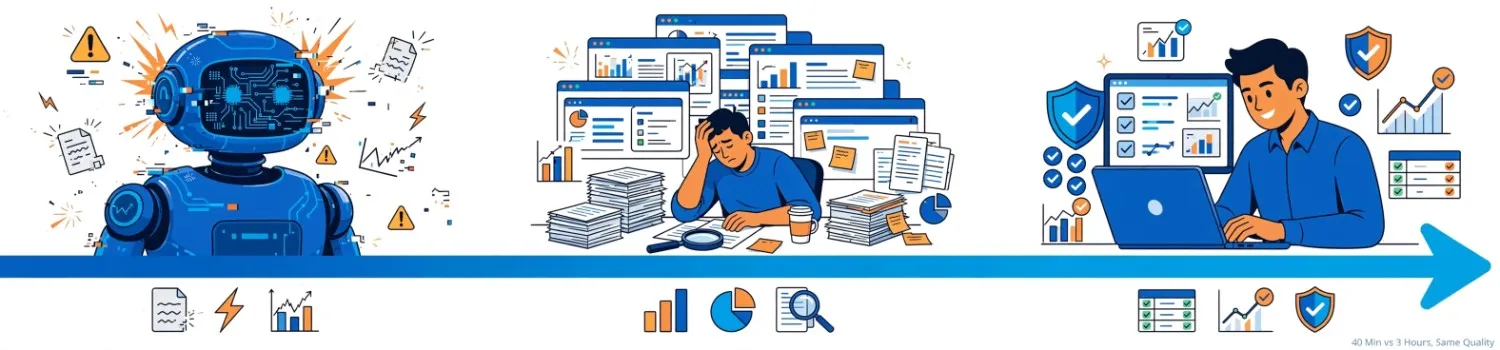
- AI agent: Generates a fast first-draft summary from publicly available data. May include outdated information, hallucinated sources, or missing context. Requires significant human review before use.
- Traditional VA: Manually researches and compiles the brief. Thorough and reliable but takes two to three hours for a detailed report.
- AI-trained VPA: Uses AI research tools to accelerate initial data gathering and synthesis, then applies human judgment to verify sources, add context, and structure the final deliverable. Delivers a high-quality brief in 40 to 60 minutes. The output quality matches the traditional VA; the turnaround is significantly faster.
Scenario 2: Managing High-Volume Email Triage
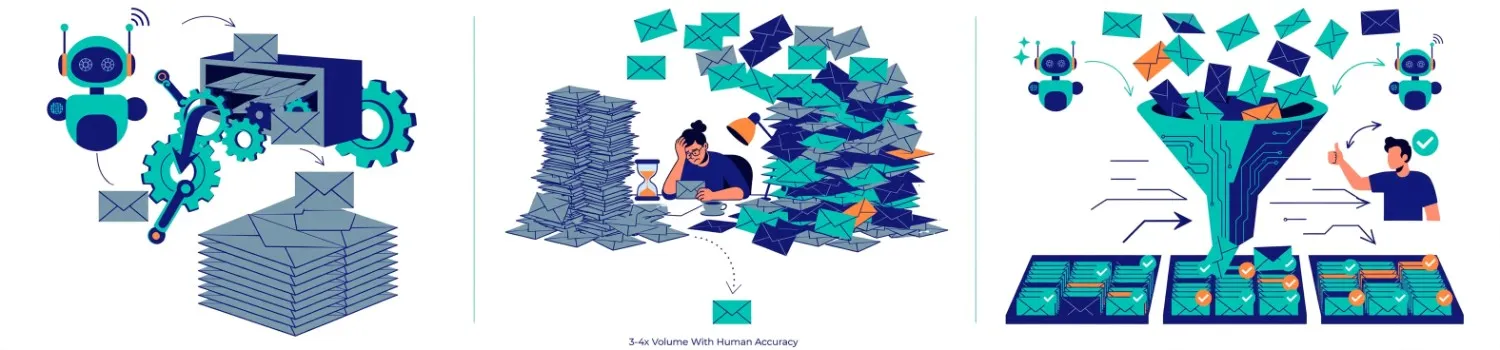
- AI agent: Can auto-sort, label, and draft templated replies at scale. Lacks the judgment to recognize when a message from a client requires a nuanced, non-templated response.
- Traditional VA: Reads every email, applies professional judgment consistently, and drafts context-appropriate replies. Slower for high volume, but every decision is made by a professional.
- AI-trained VPA: Uses AI-assisted triage to sort and pre-categorize incoming messages, then applies human review to every response before it is sent. Handles three to four times the email volume of a traditional VA at equivalent accuracy.
Scenario 3: Drafting a Weekly Executive Briefing
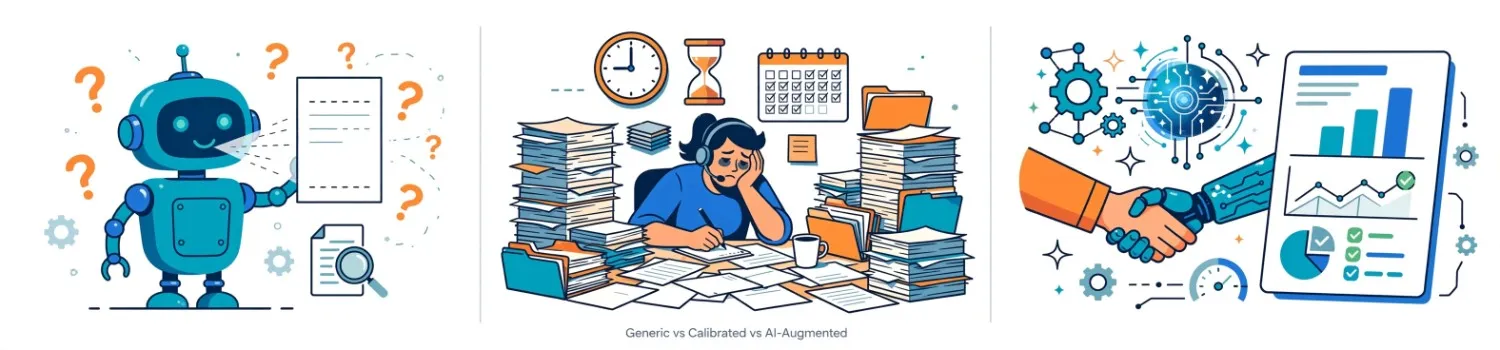
- AI agent: Generates a generic summary from inputs you provide. The output is often well-structured but lacks the contextual intelligence to prioritize what matters most to a specific executive’s decision-making style.
- Traditional VA: Prepares the briefing manually based on accumulated knowledge of your preferences. Time-intensive but well-calibrated.
- AI-trained VPA: Uses AI drafting tools with custom instructions built around your preferences, then reviews and refines the output with professional judgment. Delivers a high-quality briefing in a fraction of the traditional time.
5 Signs You Need an AI-Trained VPA Rather Than a Standard Option
Not every buyer needs an AI-trained virtual personal assistant. However, certain situations make the AI-augmented model particularly valuable:
Your task volume exceeds what a traditional VA can handle at your budget.
If you need outputs that would typically require multiple hours of manual work per day, an AI-trained VPA’s multiplied output capacity directly solves the throughput problem.
You require broad task coverage without hiring multiple specialists.
Research, drafting, scheduling, data formatting, and communication support are all within the scope of a well-trained AI-augmented VPA – without the cost of separate freelancers for each category.
Turnaround time is a competitive advantage in your work.
In fast-moving professional environments, the ability to receive a polished briefing document or drafted response in 30 minutes rather than three hours changes how decisions are made.
You want accountability alongside speed.
Pure AI tools have no owner. An AI-trained VPA is a professional who takes ownership of every deliverable, reviews every AI-generated output, and ensures nothing reaches you without human quality control.
You have previously been disappointed by chatbot-based solutions.
If you have tried AI-only tools and found the outputs require too much revision, or the systems lack the contextual awareness your work demands, an AI-trained VPA solves that gap precisely.
Common Misconceptions About AI-Trained Virtual Personal Assistants
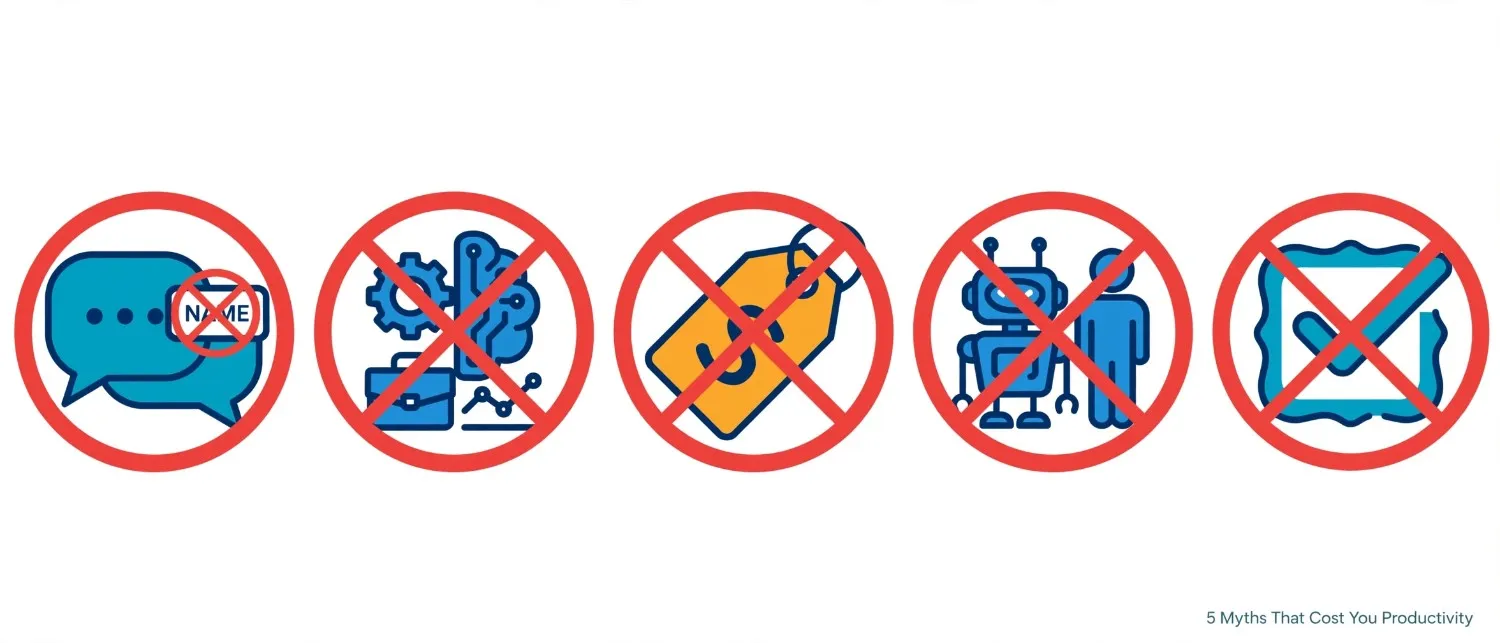
Misconception 1: “An AI-trained VPA is just a chatbot with a human name”
This is the most common and most damaging misconception. A chatbot executes pattern-matched responses or probabilistic text generation. An AI-trained VPA is a human professional who uses AI tools as a productivity layer. The human’s judgment, professional discretion, and accountability are fully present; the AI tools simply accelerate execution and expand capability breadth.
Misconception 2: “AI training replaces the need for professional experience”
AI tools make experienced professionals faster. They do not substitute for professional experience. An AI-trained VPA without genuine administrative, communication, and organizational experience will produce AI-accelerated mediocrity, not AI-accelerated excellence. Effective training combines AI tool proficiency with a foundation of real professional competence.
Misconception 3: “AI-trained VPAs are significantly more expensive”
Because AI tools increase output per hour rather than requiring additional time, an AI-trained VPA typically delivers substantially more value at a comparable rate to a traditional VA. The cost-per-useful-output calculation – not the hourly rate – is the relevant metric.
Misconception 4: “Pure AI tools will soon make AI-trained VPAs unnecessary”
According to landmark research cited by Beam.ai on hybrid human-AI performance, fully autonomous AI agents fail at a significantly higher rate than human-AI collaborative arrangements across complex task categories. The evidence consistently supports the hybrid model as the optimal professional configuration – not full automation – for judgment-dependent work.
Misconception 5: “Any VA who uses AI tools is automatically AI-trained”
Occasional use of a chatbot is not the same as systematic AI tool integration. A genuinely AI-trained VPA has a structured, documented tool stack, calibrated prompting systems, quality review protocols, and workflow-specific AI configurations. The distinction is between sporadic tool use and integrated, optimized human-AI workflow design.
Expert Tips for Working Effectively with an AI-Trained VPA
These principles help buyers extract the maximum value from an AI-augmented professional relationship:
Invest in calibration upfront.
The quality of AI-assisted outputs depends heavily on how well the VPA understands your preferences, tone, and standards. Spend the first two weeks building detailed preference documentation together. This investment compounds across every subsequent deliverable.
Distinguish AI-appropriate tasks from human-only tasks.
Work with your VPA to classify your task list explicitly. Routine drafting, research synthesis, and formatting are ideal for AI acceleration. Sensitive stakeholder communications, nuanced negotiations, and relationship-critical correspondence should remain fully human-authored.
Set output quality benchmarks, not just time benchmarks.
An AI-trained VPA’s primary advantage is output quality at speed. Define what “publication-ready” means for each task type so your VPA calibrates AI tool usage to that standard consistently.
Review AI tool configurations periodically.
The AI tool landscape evolves rapidly. Ask your VPA to review and update their tool stack quarterly, ensuring they are using current capabilities rather than defaulting to established habits with outdated configurations.
Use your VPA’s AI capabilities to build institutional knowledge.
AI-trained VPAs can document your processes, preferences, and decision frameworks at a speed and level of detail that traditional assistants find difficult to sustain. Treat this as an asset-building opportunity.
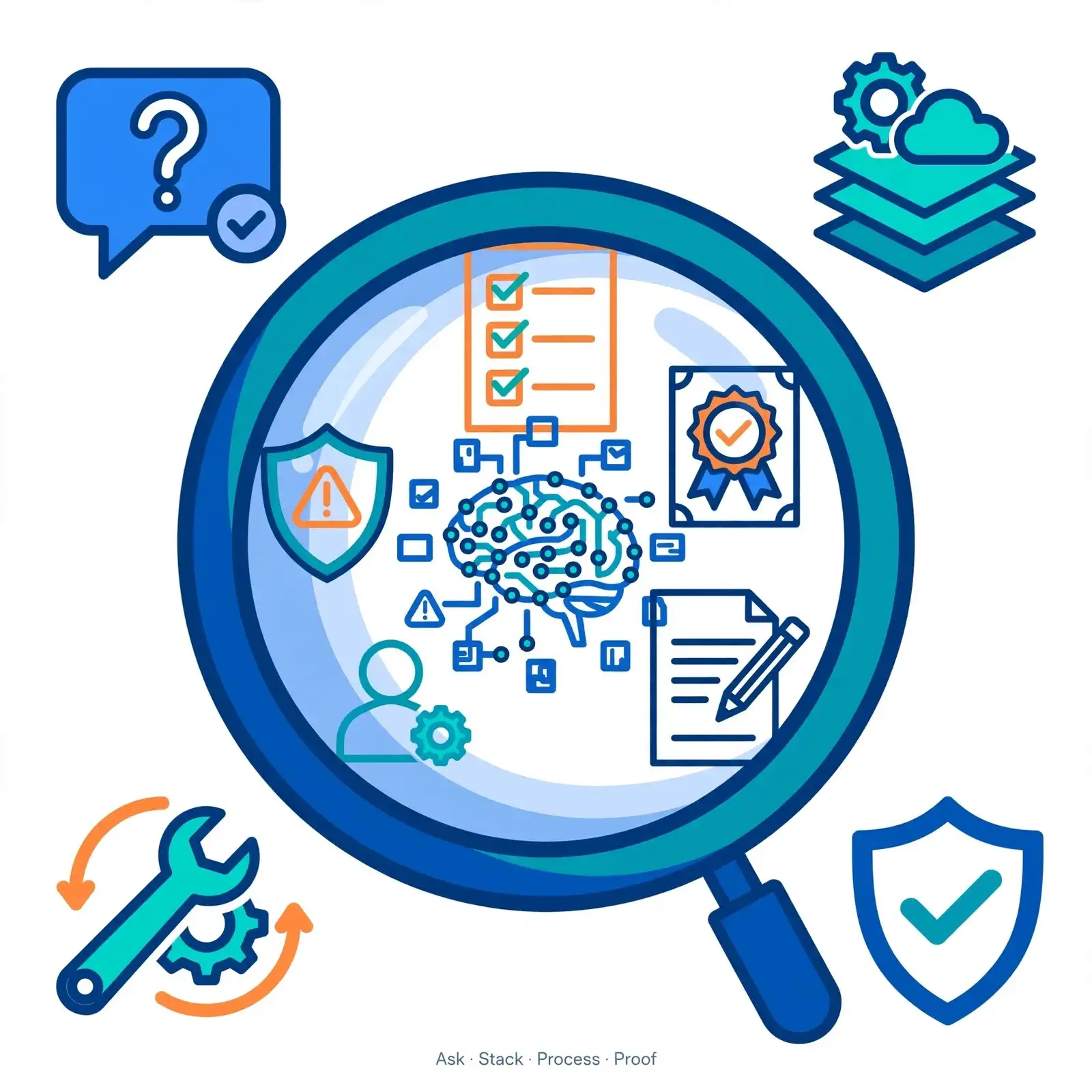
How to Evaluate Whether a VPA Is Genuinely AI-Trained
Not all providers who claim “AI-trained” status deliver the substance behind the label. Use these evaluation criteria:
During the screening process, ask:
- “Walk me through your AI tool stack and how you use each tool for different task categories.”
- “How do you quality-review AI-generated outputs before delivering them to a client?”
- “Give me an example of a task where you chose not to use AI tools. What was the reasoning?”
- “How do you handle a situation where an AI output is incorrect or contextually wrong?”
- “What structured training or certification have you completed for AI tool use in professional service contexts?”
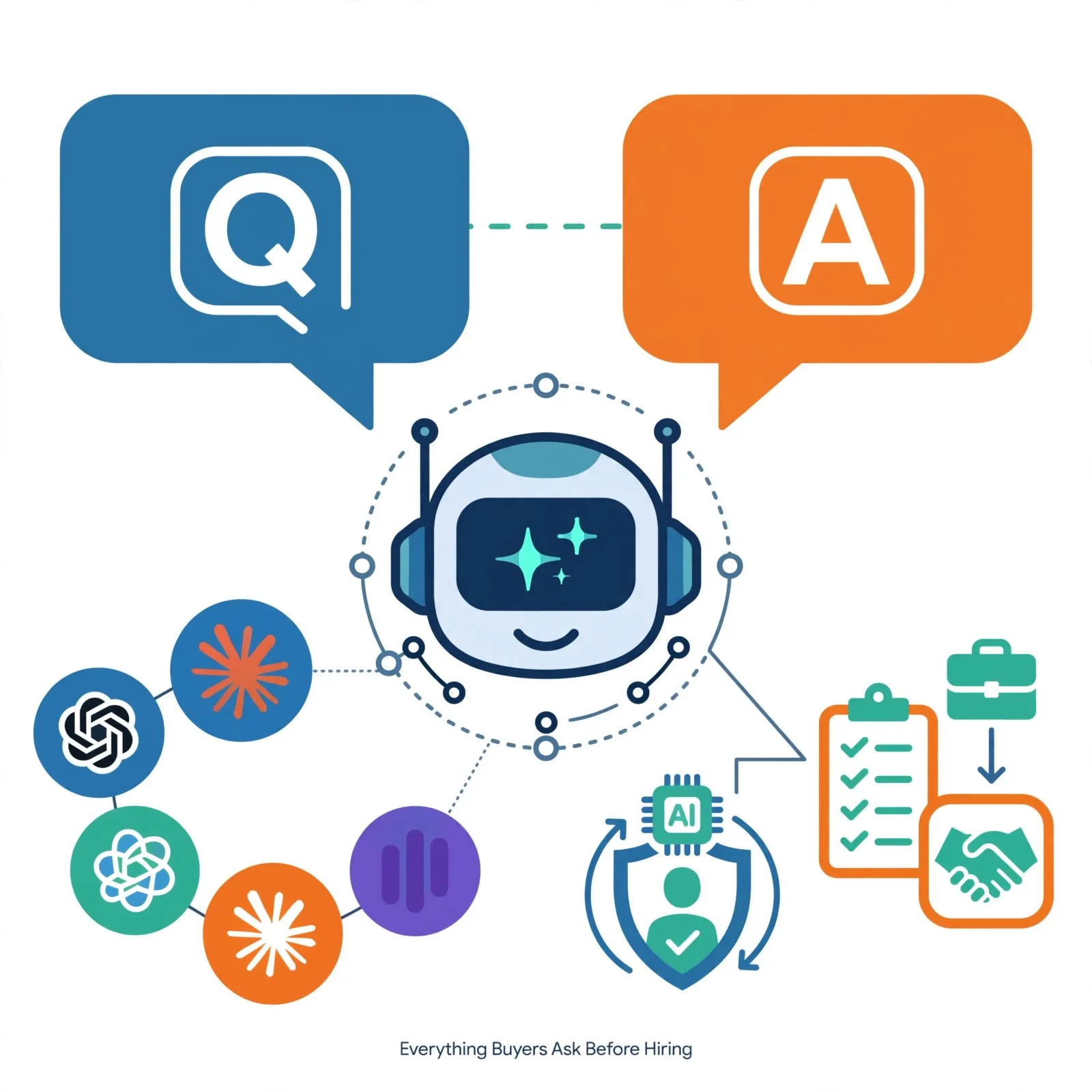
In the paid test task, evaluate:
- Whether the final deliverable shows evidence of AI-augmented production (speed, breadth, formatting quality) combined with clear human editing and judgment
- Whether the VPA proactively communicates about their process, not just their output
- Whether the output demonstrates genuine contextual understanding of your brief – not just pattern-matched responses to your stated inputs
A genuinely AI-trained VPA will answer these questions specifically and confidently. Vague answers about “using AI tools sometimes” indicate a traditional VA with occasional AI usage, not a systematically trained AI-augmented professional.
Frequently Asked Questions About AI-Trained Virtual Personal Assistants
What exactly is an AI-trained virtual personal assistant?
An AI-trained virtual personal assistant is a human remote professional who has been systematically trained to use AI tools – such as large language models, AI-powered research platforms, and workflow automation software – as an integrated part of their daily work. They retain full human judgment, accountability, and contextual reasoning while producing significantly higher output volume and breadth than a traditional VA working manually.
How is an AI-trained virtual personal assistant different from a chatbot?
A chatbot generates automated responses based on pattern matching or probabilistic text generation. It has no professional judgment, no accountability for outcomes, and no ability to manage relationships or adapt genuinely to novel situations. An AI-trained VPA is a human professional who uses AI tools to work faster; the human’s intelligence, discretion, and ownership of every deliverable remain fully intact.
Is an AI-trained VPA more expensive than a traditional virtual assistant?
Not necessarily on an hourly rate basis. Because AI tools increase output per hour, the cost-per-useful-output for an AI-trained VPA is typically lower than for a traditional VA handling the same task volume manually. You receive more work per dollar, not just faster work.
Can I use pure AI tools instead of an AI-trained virtual personal assistant?
Pure AI tools deliver excellent value for highly structured, rule-based tasks with predictable inputs. However, they lack the judgment, accountability, proactive initiative, and relationship management capacity of a human professional. For ongoing, high-complexity personal and executive assistance, pure AI tools consistently require significant human oversight to reach acceptable output quality – at which point, you are already doing much of the work yourself.
What AI tools does a trained VPA typically use?
A well-equipped AI-trained VPA maintains a tool stack that typically includes: large language models for drafting and research (ChatGPT, Claude), AI-powered research platforms, email management and triage tools with AI categorization, meeting transcription and summary tools, scheduling automation platforms, and workflow automation connectors such as Zapier or Make. The specific configuration varies by task scope and client requirements.
How do I verify that a VPA is genuinely AI-trained and not just occasionally using AI?
Ask specific questions during screening: what their full tool stack is, how they quality-review AI outputs, when they choose not to use AI, and what structured training they have completed. In the paid test task, look for evidence of AI-augmented production combined with clear human editing and professional judgment. Vague answers or a simple “I use ChatGPT sometimes” indicate traditional VA practice, not genuine AI integration.
The AI-Trained VPA Is Not a Trend – It’s a Structural Shift
The emergence of the AI-trained virtual personal assistant does not represent a passing technology trend. It reflects a fundamental structural shift in what professional remote assistance means and what buyers can legitimately expect from a skilled VA engagement in 2026 and beyond.
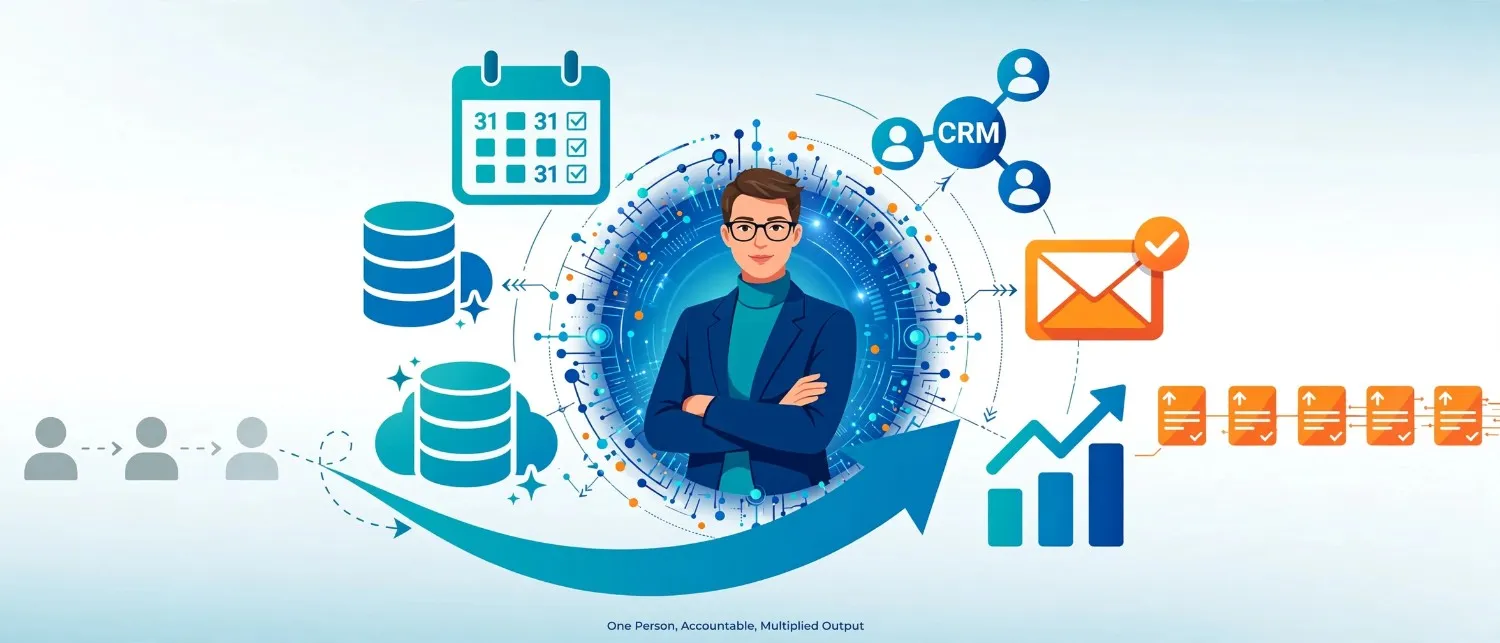
AI agents deliver speed and scale for structured, rule-based tasks. Traditional VAs deliver the human judgment, accountability, and relational intelligence that no current AI system reliably replicates. The AI-trained VPA combines both capabilities into a single professional relationship: one person, accountable for your outcomes, working with a tool stack that multiplies their effective output to a level that neither model alone can match.
The practical implication for buyers is straightforward: if your current VA is not using AI tools systematically, you are leaving measurable productivity on the table. If you are relying solely on AI tools for tasks that require judgment, context, and professional ownership, you are accepting a quality gap that has real downstream costs.
The right configuration is a skilled, accountable human professional who is also a genuinely trained AI practitioner – and that combination is now available, accessible, and demonstrably superior to both alternatives.
Ready to move beyond the limitations of both pure AI tools and traditional assistant models? and connect with a professionally trained, AI-augmented VPA matched to your specific workflow and operational standards.